Buy xxwwx.com ?
We are moving the project
xxwwx.com .
Are you interested in purchasing the domain
xxwwx.com ?
domain@kv-gmbh.de · 0541-91531010
Buy xxwwx.com ?
How to taper off proton pump inhibitors?
To taper off proton pump inhibitors (PPIs), it is recommended to gradually reduce the dosage over a period of several weeks to minimize the risk of rebound acid hypersecretion. This can be done by gradually decreasing the frequency of taking the medication or by switching to a lower dose. It is important to consult with a healthcare provider before making any changes to your PPI regimen to ensure a safe and effective tapering plan tailored to your individual needs. Additionally, lifestyle modifications such as dietary changes and stress management techniques may help in managing acid reflux symptoms during the tapering process. **
Is Ashwagandha an acetylcholinesterase inhibitor?
Yes, Ashwagandha has been found to have acetylcholinesterase inhibitory activity. Acetylcholinesterase is an enzyme that breaks down the neurotransmitter acetylcholine, and inhibiting this enzyme can lead to increased levels of acetylcholine in the brain. This can potentially have cognitive and memory-enhancing effects, making Ashwagandha a potential candidate for supporting brain health and function. However, more research is needed to fully understand the extent of Ashwagandha's acetylcholinesterase inhibitory effects and its potential therapeutic applications. **

Similar search terms for Proton pump inhibitor
Top-Angebote
Products related to Proton pump inhibitor:



-
What is a hair growth inhibitor?
A hair growth inhibitor is a product that slows down or reduces the growth of hair. These inhibitors typically work by blocking the enzymes that are necessary for hair growth, resulting in finer and slower-growing hair. They are often used after hair removal methods like shaving or waxing to prolong the time between treatments and reduce the frequency of hair removal. **
-
What is proton donation and proton acceptance in chemistry?
Proton donation and proton acceptance are key concepts in acid-base chemistry. Proton donation refers to the transfer of a hydrogen ion (proton) from one substance to another. This typically occurs when an acid donates a proton to a base. Proton acceptance, on the other hand, involves the acceptance of a proton by a substance, often a base, leading to the formation of a new chemical species. These processes are fundamental to understanding the behavior of acids and bases in chemical reactions. **
-
What is meant by proton donors and proton acceptors?
Proton donors are substances that can donate a proton (H+) to another substance. This typically involves the release of a hydrogen ion. Proton acceptors, on the other hand, are substances that can accept a proton from another substance. This typically involves the uptake of a hydrogen ion. In the context of acid-base reactions, proton donors are acids, while proton acceptors are bases. **
-
What determines a proton donor and a proton acceptor?
A proton donor is a substance that can release a proton (H+) in a chemical reaction, while a proton acceptor is a substance that can accept a proton. This ability is determined by the presence of a hydrogen atom with a positive charge (H+) in the molecule. In general, substances with a lone pair of electrons, such as a hydroxide ion (OH-) or an amine group (NH2), can act as proton acceptors, while substances with a hydrogen atom bonded to an electronegative atom, such as a hydrochloric acid (HCl) or acetic acid (CH3COOH), can act as proton donors. **


Why are carboxylic acids proton donors and amines proton acceptors?
Carboxylic acids are proton donors because they contain a highly electronegative oxygen atom that can stabilize the resulting carboxylate anion by delocalizing the negative charge. Amines, on the other hand, are proton acceptors because they contain a lone pair of electrons on the nitrogen atom that can readily accept a proton to form a positively charged ammonium ion. This ability to donate or accept protons is due to the presence of functional groups in these molecules that can easily gain or lose a hydrogen ion in solution. **
Are there only proton-proton collisions in the particle accelerator?
No, there are not only proton-proton collisions in the particle accelerator. Particle accelerators can also collide protons with other particles such as electrons or heavy ions like lead or gold. These collisions are important for studying different aspects of particle physics and for exploring the fundamental forces and particles that make up the universe. By colliding different types of particles, scientists can gain a better understanding of the fundamental building blocks of matter and the forces that govern their interactions. **
Top-Angebote
Products related to Proton pump inhibitor:
-
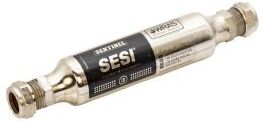
Sentinel SESI 15mm Electrolytic InhibitorLimescale build-up inside household appliances can cause them to run less effectively, increases the likelihood of premature breakdown and impairs the efficiency of heat transfer. The Sentinel SESI is a cost-effective scale inhibitor solution to help tackle limescale build up and could save up to £130 a year on typical energy bills.Sentinel SESI is an electrolytic scale inhibitor, a cost-effective solution to help tackle limescale build up. It provides a long term solution which requires no maintenance and protects the whole house without introducing any undesirable chemicals to drinking water. Sentinel SESI is easy to fit, WRAS-approved and comes with a 5 year guarantee.59,32 £*Shipping: 5,00 £Secure redirect to the provider
-
All Categories Goods Premium High Pressure Hydraulic Gear Pump Single Gear Pump For Heavy Duty Machinery Premium High Pressure Hydraulic Gear Pump Single Gear Pump For Heavy Duty MachineryExperience reliable performance with the ultimate hydraulic gear pump built for demanding applications. This highefficiency high pressure gear pump delivers consistent fluid power with up to 21MPa preset pressure for smooth, powerful operation....159,97 $*Shipping: 0,00 $Secure redirect to the provider
-
How to taper off proton pump inhibitors?
To taper off proton pump inhibitors (PPIs), it is recommended to gradually reduce the dosage over a period of several weeks to minimize the risk of rebound acid hypersecretion. This can be done by gradually decreasing the frequency of taking the medication or by switching to a lower dose. It is important to consult with a healthcare provider before making any changes to your PPI regimen to ensure a safe and effective tapering plan tailored to your individual needs. Additionally, lifestyle modifications such as dietary changes and stress management techniques may help in managing acid reflux symptoms during the tapering process. **
-
Is Ashwagandha an acetylcholinesterase inhibitor?
Yes, Ashwagandha has been found to have acetylcholinesterase inhibitory activity. Acetylcholinesterase is an enzyme that breaks down the neurotransmitter acetylcholine, and inhibiting this enzyme can lead to increased levels of acetylcholine in the brain. This can potentially have cognitive and memory-enhancing effects, making Ashwagandha a potential candidate for supporting brain health and function. However, more research is needed to fully understand the extent of Ashwagandha's acetylcholinesterase inhibitory effects and its potential therapeutic applications. **
-
What is a hair growth inhibitor?
A hair growth inhibitor is a product that slows down or reduces the growth of hair. These inhibitors typically work by blocking the enzymes that are necessary for hair growth, resulting in finer and slower-growing hair. They are often used after hair removal methods like shaving or waxing to prolong the time between treatments and reduce the frequency of hair removal. **
-
What is proton donation and proton acceptance in chemistry?
Proton donation and proton acceptance are key concepts in acid-base chemistry. Proton donation refers to the transfer of a hydrogen ion (proton) from one substance to another. This typically occurs when an acid donates a proton to a base. Proton acceptance, on the other hand, involves the acceptance of a proton by a substance, often a base, leading to the formation of a new chemical species. These processes are fundamental to understanding the behavior of acids and bases in chemical reactions. **
Similar search terms for Proton pump inhibitor
-
Compass Accessories 09151 Foot pumpFeatures: with gauge; Supplementary Article / Supplementary Info: with piston; Gauge: with analog display; Pressure to [bar]: 7; Supplementary Article / Supplementary Info Info 2: with pedal; Hose Length [m]: 0,58,99 £*Shipping: 8,45 £Secure redirect to the provider
-
Multicon Wholesale Hub Manual Oil Transfer Pump For Gallon Bucket Gear Oil Hand Dispenser Pump Manual Oil Transfer Pump For Gallon Bucket Gear Oil Hand Dispenser PumpEffortlessly move thick oils without mess or strain using the manual oil transfer pump, designed for smooth, controlled dispensing in demanding workshop environments. Built as a reliable gear oil pump, it is ideal for mechanics, workshops, and DIY...148,97 $*Shipping: 0,00 $Secure redirect to the provider
-
What is meant by proton donors and proton acceptors?
Proton donors are substances that can donate a proton (H+) to another substance. This typically involves the release of a hydrogen ion. Proton acceptors, on the other hand, are substances that can accept a proton from another substance. This typically involves the uptake of a hydrogen ion. In the context of acid-base reactions, proton donors are acids, while proton acceptors are bases. **
-
What determines a proton donor and a proton acceptor?
A proton donor is a substance that can release a proton (H+) in a chemical reaction, while a proton acceptor is a substance that can accept a proton. This ability is determined by the presence of a hydrogen atom with a positive charge (H+) in the molecule. In general, substances with a lone pair of electrons, such as a hydroxide ion (OH-) or an amine group (NH2), can act as proton acceptors, while substances with a hydrogen atom bonded to an electronegative atom, such as a hydrochloric acid (HCl) or acetic acid (CH3COOH), can act as proton donors. **
-
Why are carboxylic acids proton donors and amines proton acceptors?
Carboxylic acids are proton donors because they contain a highly electronegative oxygen atom that can stabilize the resulting carboxylate anion by delocalizing the negative charge. Amines, on the other hand, are proton acceptors because they contain a lone pair of electrons on the nitrogen atom that can readily accept a proton to form a positively charged ammonium ion. This ability to donate or accept protons is due to the presence of functional groups in these molecules that can easily gain or lose a hydrogen ion in solution. **
-
Are there only proton-proton collisions in the particle accelerator?
No, there are not only proton-proton collisions in the particle accelerator. Particle accelerators can also collide protons with other particles such as electrons or heavy ions like lead or gold. These collisions are important for studying different aspects of particle physics and for exploring the fundamental forces and particles that make up the universe. By colliding different types of particles, scientists can gain a better understanding of the fundamental building blocks of matter and the forces that govern their interactions. **
* All prices are inclusive of VAT and, if applicable, plus shipping costs. The offer information is based on the details provided by the respective shop and is updated through automated processes. Real-time updates do not occur, so deviations can occur in individual cases. ** Note: Parts of this content were created by AI.