Buy xxwwx.com ?
We are moving the project
xxwwx.com .
Are you interested in purchasing the domain
xxwwx.com ?
domain@kv-gmbh.de · 0541-91531010
Buy xxwwx.com ?
What is an isometry with non-orthogonal corners?
An isometry with non-orthogonal corners is a transformation that preserves distances and angles, but the corners of the shape are not at right angles to each other. This means that the shape is still congruent to its original form after the transformation, but the angles at the corners are not 90 degrees. Isometries with non-orthogonal corners can include rotations, reflections, translations, and glide reflections. These transformations are important in geometry and can be used to study the properties of shapes and figures. **
What is an isometry with non-orthogonal vertices?
An isometry with non-orthogonal vertices is a transformation that preserves distances and angles between points, but the vertices are not at right angles to each other. This means that the shape is still congruent to its original form, but the angles between the edges are not necessarily 90 degrees. Isometries with non-orthogonal vertices can include translations, rotations, reflections, and glide reflections. These transformations are important in geometry and can help us understand the properties of shapes in different orientations. **

Similar search terms for Non-orthogonal
Top-Angebote
Products related to Non-orthogonal:
-
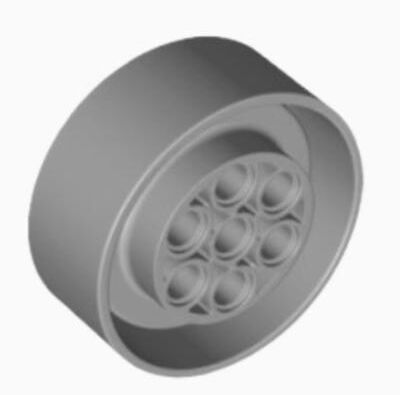
Lush Living Finds Perforated Brick Assembly Toy Accessories With Technology Mechanical Wheels Perforated Brick Assembly Toy Accessories With Technology Mechanical WheelsEnhance Creativity with Technology Mechanical Wheels Unlock the power of innovation with our technology mechanical wheels, designed specifically for perforated brick assembly toy accessories. Whether you are a hobbyist or a seasoned builder, these...43,97 $*Shipping: 0,00 $Secure redirect to the provider
-
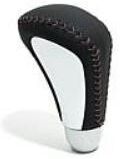
Uplift Picks Universal Silicone Gear Shift Knob Cover Non Slip Waterproof Manual Shifter Protector 6 GearSmooth shifting feels better when your grip is comfortable and secure. This gear shift knob cover protects your shifter from dust, scratches, and everyday wear while giving your hand a softer feel. Made from flexible silicone, it fits snugly and...25,97 $*Shipping: 0,00 $Secure redirect to the provider
-
Edge Star Wars RPG: Gadgets and Gear Roleplaying Supplement for Fans of the Galactic Civil WarExpand your Star Wars roleplaying adventures with Gadgets and Gear, a supplement focused on the equipment, weapons, and practical technology used throughout the galaxy. From everyday tools and survival equipment to specialist weapons and gear used by troopers, Jedi, civilians, and criminals, this guide adds depth to characters and encounters during the Galactic Civil War. Use the contents to broaden character options, outfit adventuring parties, and bring greater detail to missions across the Star Wars universe. Whether your campaign follows rebels, smugglers, explorers, or Imperial forces, the equipment featured in this supplement can help shape distinctive characters and support imaginative stories.40,59 £*Shipping: 3,95 £Secure redirect to the provider
-
Uplifted Finds Non Slip Universal Silicone Car Manual Gear Shift Knob Cover Protection Shell 5 Gear BProtect your gear shift knob and upgrade your car's interior with this NonSlip Silicone Manual Gear Shift Knob Cover. Made from highquality, ecofriendly foodgrade silicone, this flexible cover slides smoothly over round gear shift handles to shield...34,97 $*Shipping: 0,00 $Secure redirect to the provider


-
What is an orthogonal vector?
An orthogonal vector is a vector that is perpendicular to another vector. In other words, two vectors are orthogonal if their dot product is zero. Geometrically, this means that the two vectors form a 90-degree angle with each other. Orthogonal vectors are important in many areas of mathematics and physics, including linear algebra and vector calculus. **
-
What does the term orthogonal mean?
The term orthogonal refers to two things being perpendicular or at right angles to each other. In mathematics, it often refers to vectors or matrices that are perpendicular to each other. In a broader sense, it can also refer to any two things that are independent or unrelated to each other. **
-
Are linearly independent vectors always orthogonal?
No, linearly independent vectors are not always orthogonal. Linear independence means that no vector in the set can be written as a linear combination of the others, while orthogonality means that the vectors are perpendicular to each other. It is possible for linearly independent vectors to be orthogonal, but it is not a guarantee. For example, in three-dimensional space, the vectors (1, 0, 0), (0, 1, 0), and (0, 0, 1) are linearly independent and orthogonal, but the vectors (1, 1, 0) and (0, 1, 1) are linearly independent but not orthogonal. **
-
When are planes and lines orthogonal?
Planes and lines are orthogonal when the line is perpendicular to the plane. This means that the line forms a 90-degree angle with the plane, creating a right angle. In other words, the direction of the line is perpendicular to the direction of the plane. This relationship is important in geometry and engineering, as it affects the intersection and orientation of different geometric elements. **


What are non-invasive medical devices?
Non-invasive medical devices are tools or equipment that do not penetrate the body or break the skin during their use. These devices are designed to diagnose, monitor, or treat medical conditions without the need for surgery or other invasive procedures. Examples of non-invasive medical devices include blood pressure monitors, thermometers, and ultrasound machines. These devices are often preferred by patients and healthcare providers due to their lower risk of complications and ease of use. **
What is a proof of two orthogonal?
Two vectors are considered orthogonal if their dot product is equal to zero. This means that the angle between the two vectors is 90 degrees, forming a right angle. Mathematically, if vectors u and v are orthogonal, then u · v = 0. This property can be used to prove that two vectors are orthogonal by calculating their dot product and showing that it equals zero. **
Top-Angebote
Products related to Non-orthogonal:
-
Rare Purchases Piece Repair Tool Kit With Torx Screwdrivers For Digital Devices And Gadgets magnetismIntroducing our Multifunctional Precision Screwdriver Set, the essential tool kit for anyone who works with digital devices. Whether you're repairing a phone, tablet, PC, or any other gadget, this versatile tool set provides all the necessary...49,97 $*Shipping: 0,00 $Secure redirect to the provider
-
Lush Living Finds Perforated Brick Assembly Toy Accessories With Technology Mechanical Wheels Perforated Brick Assembly Toy Accessories With Technology Mechanical WheelsEnhance Creativity with Technology Mechanical Wheels Unlock the power of innovation with our technology mechanical wheels, designed specifically for perforated brick assembly toy accessories. Whether you are a hobbyist or a seasoned builder, these...43,97 $*Shipping: 0,00 $Secure redirect to the provider
-
Uplift Picks Universal Silicone Gear Shift Knob Cover Non Slip Waterproof Manual Shifter Protector 6 GearSmooth shifting feels better when your grip is comfortable and secure. This gear shift knob cover protects your shifter from dust, scratches, and everyday wear while giving your hand a softer feel. Made from flexible silicone, it fits snugly and...25,97 $*Shipping: 0,00 $Secure redirect to the provider
-
What is an isometry with non-orthogonal corners?
An isometry with non-orthogonal corners is a transformation that preserves distances and angles, but the corners of the shape are not at right angles to each other. This means that the shape is still congruent to its original form after the transformation, but the angles at the corners are not 90 degrees. Isometries with non-orthogonal corners can include rotations, reflections, translations, and glide reflections. These transformations are important in geometry and can be used to study the properties of shapes and figures. **
-
What is an isometry with non-orthogonal vertices?
An isometry with non-orthogonal vertices is a transformation that preserves distances and angles between points, but the vertices are not at right angles to each other. This means that the shape is still congruent to its original form, but the angles between the edges are not necessarily 90 degrees. Isometries with non-orthogonal vertices can include translations, rotations, reflections, and glide reflections. These transformations are important in geometry and can help us understand the properties of shapes in different orientations. **
-
What is an orthogonal vector?
An orthogonal vector is a vector that is perpendicular to another vector. In other words, two vectors are orthogonal if their dot product is zero. Geometrically, this means that the two vectors form a 90-degree angle with each other. Orthogonal vectors are important in many areas of mathematics and physics, including linear algebra and vector calculus. **
-
What does the term orthogonal mean?
The term orthogonal refers to two things being perpendicular or at right angles to each other. In mathematics, it often refers to vectors or matrices that are perpendicular to each other. In a broader sense, it can also refer to any two things that are independent or unrelated to each other. **
Similar search terms for Non-orthogonal
-
Edge Star Wars RPG: Gadgets and Gear Roleplaying Supplement for Fans of the Galactic Civil WarExpand your Star Wars roleplaying adventures with Gadgets and Gear, a supplement focused on the equipment, weapons, and practical technology used throughout the galaxy. From everyday tools and survival equipment to specialist weapons and gear used by troopers, Jedi, civilians, and criminals, this guide adds depth to characters and encounters during the Galactic Civil War. Use the contents to broaden character options, outfit adventuring parties, and bring greater detail to missions across the Star Wars universe. Whether your campaign follows rebels, smugglers, explorers, or Imperial forces, the equipment featured in this supplement can help shape distinctive characters and support imaginative stories.40,59 £*Shipping: 3,95 £Secure redirect to the provider
-
Uplifted Finds Non Slip Universal Silicone Car Manual Gear Shift Knob Cover Protection Shell 5 Gear BProtect your gear shift knob and upgrade your car's interior with this NonSlip Silicone Manual Gear Shift Knob Cover. Made from highquality, ecofriendly foodgrade silicone, this flexible cover slides smoothly over round gear shift handles to shield...34,97 $*Shipping: 0,00 $Secure redirect to the provider
-
Inspire Curations Ceramic Precision Screwdriver Antistatic Non Magnetic Screwdriver Flat & Phillips For Electronics Repair 4pcsHandle delicate electronics with confidence using this ceramic precision screwdriver. Designed with a zirconium ceramic tip and an antistatic handle, this nonmagnetic screwdriver is ideal for adjusting sensitive electronic components without causing...78,00 $*Shipping: 0,00 $Secure redirect to the provider
-
Rare Purchases Piece Repair Tool Kit With Torx Screwdrivers For Digital Devices And Gadgets hand TwistIntroducing our Multifunctional Precision Screwdriver Set, the essential tool kit for anyone who works with digital devices. Whether you're repairing a phone, tablet, PC, or any other gadget, this versatile tool set provides all the necessary...39,97 $*Shipping: 0,00 $Secure redirect to the provider
-
Are linearly independent vectors always orthogonal?
No, linearly independent vectors are not always orthogonal. Linear independence means that no vector in the set can be written as a linear combination of the others, while orthogonality means that the vectors are perpendicular to each other. It is possible for linearly independent vectors to be orthogonal, but it is not a guarantee. For example, in three-dimensional space, the vectors (1, 0, 0), (0, 1, 0), and (0, 0, 1) are linearly independent and orthogonal, but the vectors (1, 1, 0) and (0, 1, 1) are linearly independent but not orthogonal. **
-
When are planes and lines orthogonal?
Planes and lines are orthogonal when the line is perpendicular to the plane. This means that the line forms a 90-degree angle with the plane, creating a right angle. In other words, the direction of the line is perpendicular to the direction of the plane. This relationship is important in geometry and engineering, as it affects the intersection and orientation of different geometric elements. **
-
What are non-invasive medical devices?
Non-invasive medical devices are tools or equipment that do not penetrate the body or break the skin during their use. These devices are designed to diagnose, monitor, or treat medical conditions without the need for surgery or other invasive procedures. Examples of non-invasive medical devices include blood pressure monitors, thermometers, and ultrasound machines. These devices are often preferred by patients and healthcare providers due to their lower risk of complications and ease of use. **
-
What is a proof of two orthogonal?
Two vectors are considered orthogonal if their dot product is equal to zero. This means that the angle between the two vectors is 90 degrees, forming a right angle. Mathematically, if vectors u and v are orthogonal, then u · v = 0. This property can be used to prove that two vectors are orthogonal by calculating their dot product and showing that it equals zero. **
* All prices are inclusive of VAT and, if applicable, plus shipping costs. The offer information is based on the details provided by the respective shop and is updated through automated processes. Real-time updates do not occur, so deviations can occur in individual cases. ** Note: Parts of this content were created by AI.